Friday, November 24, 2006

Asking For Money Poem For Shower

President of the Nation: Dr. Néstor Carlos Kirchner

President of the Nation
Dr. Néstor Carlos Kirchner


Birthday: 25 February 1950
Birthplace: Rio Gallegos, Santa Cruz
Profession: Lawyer
Marital Status: Married
Spouse Name: Cristina Fernandez de Kirchner
Children: Max Kirchner - Kirchner Florence

Public and Professional Performance
· Load above: Governor of the Province of Santa Cruz
* From the 2000 leads the current, space for debate and federal political thought who are joining leaders and people of different points of the country, convinced that politics is the tool capable of building a different country.
• In 1996, he was the founder of the Peronist Peronist as internal line.
• In 1994 he was elected Constitutional Convention to reform the Constitution.
· Was Secretary for Political Action National Council of the Peronist Party.
· From 1992 he was Chairman of the Provincial Council of the Peronist Party, having taken office in May 1993 and since that time being re-elected to hold title to the same
• The December 10, 1991 was elected Governor Santa Cruz Province. In 1995 and in 1999 was again elected by the people in Santa Cruz.
• In August 1992, was elected President of the Federal Organization of Oil Producing States (OFEPHI).
• Between late 1983 and July 1984 was President of the Social Welfare Fund.
· From 1987 to 1991 he was mayor of Rio Gallegos, capital of the province.
• In 1976 he graduated as a lawyer at the Universidad Nacional de La Plata.
· From very young, was active in the Peronist movement, integrating the ranks of the Peronist Youth.

Thursday, November 23, 2006

What Shall I Call My Boat?


FIVE DAYS OF THE ARGENTINE PRESIDENT

By Ricardo E. Brizuela


The failure of radical government led by Fernando de la Rua , sparked a crisis in Argentina culminated on December 21, 2001 with the resignation of chief magistrate.

It was the culmination of a period of government characterized by a gradual deterioration of the authority's head of state motivated by poor management of public affairs, all magnified by the lack of personality and strength of De la Rua.

and was given this curious fact in the history of Argentina, since the position of President of the Republic was occupied successively by 5 different agents (including De la Rua) over a period of just over ten days. The transfer of command was conducted according to the National Constitution and the Legislative and Judicial Powers in perfect order.

A brief summary of the background of the persons nominated:

Fernando de la Rua was born on September 15, 1937 and did all his studies, to be received from lawyers and doctors, in his home province , Córdoba. Affiliated to the Radical party, was advisor to the Ministry of Interior during the government of Cordoba also and radical Arturo Illia. He was senator for the Federal Capital in 1973 and integrated with Ricardo Balbin presidential ticket that opposed the Peron-Peron to the resignation of Hector Campora. He was a senator until the 1976 coup. National deputy in 1991. Chief Executive of the City of Buenos Aires in 1996. Assumed as President, succeeding Carlos Saul Menem, 10 December 1999.
Ramon Puerta: assumes as acting president on December 20, 2001, as the Provisional President of the Senate, not to be covered as vice president by the resignation of Carlos Alvarez - mate Eduardo de la Rua - in 2000. Born in Misiones and herbalist employer. It's PJ and has held various positions, including the governorship of his province. He was born on September 9, 1951. Adolfo Rodriguez Saa
: Takes on 23 December 2001. Born in San Luis, capital of San Luis Province, on July 25, 1947. He is a lawyer graduated from the University of Buenos Aires (UBA). Was five times governor of his province. He was elected president by the Legislative Assembly. Resigned on December 31, 2001. Eduardo Camano
: temporarily assumed the presidency on 31 December 2001 in his capacity as Chairman of the Chamber of Deputies, the resignation of Adolfo Rodriguez Saa. He served as member of electives.
Eduardo Duhalde: assumes the presidency on January 1, 2002 elected by the Constituent Assembly. He is a lawyer, was born in Lomas de Zamora, Buenos Aires, October 5, 1941. He has extensive experience in the Peronist party, he held various positions partiarios, starting his political career as mayor of Lomas de Zamora. He was governor of his province and national congressman. Accompanied as Vice President Dr. Carlos Saúl Menem in his first term, after the 1989 elections. The government gave Nestor Kirchner in December 2003.

How Much It Cost To Build A Database

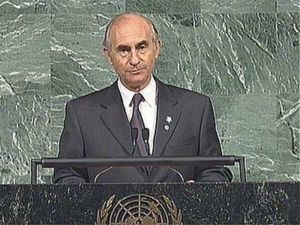
Five Presidents Dr. Fernando De La Rua Dr. Carlos Saul Menem

During the last decade, the power of financial groups and inclusive socio-economic model created during the last military dictatorship is consolidated. The new relations of exploitation and domination that arose in the dictatorship military reached full maturity with the mandate of Carlos Menem.

The economic disparity, social and political relationship between big business and small enterprises, between the rich and popular sectors, can only be compared with the 40 inequalities, ie the period before the emergence of Peronism in Argentina

What Does Collagen Do In Make-up


SYNTHESIS OF CONTENTS

The fall of the Berlin Wall in 1989 pushed through even world which a single power, the United States, exercised undisputed military hegemony, together with a formidable economic power.

The May 14, 1989. Carlos Menem, the Peronist candidate Popular Front (Frejupo and PJ coalition with several parties. Was imposed on the radical Eduardo Angeloz with 49.3% of the vote. On July 8, with circus months in advance - The handover was scheduled for December 10, before the delicate economic and social situation, Menem basin by the Office of the President.

inherited an economy in rapid breakdown, hyperinflation close to $ 5,000% and external debt was around 63,000 million dollars. Once in office, changed the populist message of his campaign for a tough adjustment program, whose character ultraliberal caused divisions within the CGT and accusations from various sectors, as contrary to the tenets of General Peron.

The new president was merely implementing what academics, economists and U.S. officials and the World Bank and International Monetary Fund established in early 1989 in the so-called 'Consensus Washington: The paper included the ten points expressing the needs and options in the world to the twenty-first century: fiscal discipline, public expenditure priorities in education and health, tax reform, positive interest rales determined by the market, rates competitive exchange, liberal trade policies, greater openness and foreign investment., privatization of public enterprises, deregulation and protection of private property. Also decided to grant financial assistance to indebted countries to adopt policies suggested by the Consensus.

to channel these recommendations, Menem quickly abandoned their promises to salariazo and productive revolution. Appointed Economy Minister Miguel Roig first, then Rapanelli Nestor, both senior executives from Bunge y Born. The Bunge y Born "Plan established price controls on imports closed and the convening of joint negotiations between employers and unions. Also approved the Law on State Reform and the Economic Emergency Law, which outlined a comprehensive plan of privatization and endowed the spacious Executive fa culties. The plan failed. Inflation did not stop the recession was increasing. Therefore took on the Calera Economy Minister of Economics, La Rioja Antonio Erman Gonzalez, who in 1990 launched a new plan. One of the first measures was the compulsive exchange fixed-term deposits Bonds. This caused irreparable damage on the sector of small and medium savers

Menem cultivated an alliance with Conservatives traditionally anti-Peronist sectors who occupied important positions in government. Thus, the privatization process was conducted by José Roberto and Maria Julia Alsogaray Dromi Towards the end of Menem's presidency and was virtually no company in state hands. Oil company YPF was privatized, Airlines Argentina, Entel, gas state, the National Savings and Security, Sanitation, airports, mail, electricity, social security, two steel plants, the Hacienda de Liniers market radios, TV channels. roads railways While preaching privatizing advised to break the state monopoly, the contractors of enjoyed a virtual monopoly, since it is geographically distributed service provision. This transformed the users hostage to the companies, which set high fees and freely reduced services to the territories that it gave them greater profits. The rail service, for example, was Greater Buenos Aires small and isolated left large areas of the country. Privatization provided some 25.006 million dollars. Between 1989 and 1990 as part of a policy of national reconciliation. Menem pardoned the maximum responsible for the repression during the dictatorship, Jorge Rafael Videla, Roberto Eduardo Viola and Leopoldo Fortunato Galtieri, and about 220 military and civilian, including montonero leader Mario Firmenich, the December 3, 1990, occurred last military coup led by Colonel carapintadas Ah Mohamed Seineldin The uprising was quelled in 1994, was abolished compulsory military service

During his administration, Menem aligned with the United States, seeking to anchor the country in the West. His foreign minister, Guido Di Tolla, even said that Argentina maintained carnal relations with that country. In 1991, before the conflict in the Persian Gulf sent troops to the area, breaking the long tradition of neutrality in Argentina. Then he positioned the U.S. side as respect to Cuba and other approaches in geopolitical and reached the status of NATO ally The country also resigned in 1990, and meanwhile develop nuclear weapons in order internal scandals followed a series of economic gives great proportions. Many staff found a lack of controls impunity to do business at state expense and Carlos Miguel Angel Vicco Spadone Secretary and presidential adviser respectively were involved in the sale of milk unfit for human consumption adviser Emir Yoma and the Minister of Works and Utilities. Roberto Dromi, decided to resign after calling bribes to American company Swift several relatives and friends of the President were investigated for drug money laundering including his sister and personal signal secretariat, Amira Yoma, officials from the U.S. company IBM and Bank l Nation to Argentina were involved in the charge and payment of bribes to posibitiar to sign a contract that benefited the foreign company

of the numerous reports Menem won a penalty which increased from four to Nine members of the Supreme Court. Justice is appointed -by mechanisms that were strongly questioned six of the nine members who would have this court. And was made an automatic majority that has never been issued against the decisions of the Executive

In 1991 he was appointed Minister of Economy Domingo Felipe a figure accepted by the establishment as it had nationalized the debt of major private economic groups when he chaired the Central Bank during the dictatorship. Soon, Congress passed the Monetary Convertibility Lev fixing the price of austral rate of 10,000 units for $ 1. Plan in 1992 regained the weight as national unit of account accurate and fixed parity against the dollar. It also prohibited any issues without the backing currency in foreign exchange reserves. While the program brought ap r ected some stability, ability to travel abroad , installment purchases and credit cards, these fruits had as a counterpart falling real wages, which recovered from inflation, would begin a steady decline. wages were frozen but prices of the products of the family budget and utility rates and rents are not. The poverty rate decreased was just a reflection of declining that of inflation accompanied by a brief growth of GDP and therefore not a redistribution of wealth. The export growth was concentrated in areas of use 'rltensivo of natural resources and the wage gap between skilled and unskilled labor grew

In 1992, a bomb destroyed the Embassy of Israel and two years later, another bomb demolished the headquarters of the Asociación Mutual Israelita Argentina AMIA). Between the two attacks 116 people died and 550 were injured After years of research still nothing has been clarified and those responsible remain unpunished.

Argentina resigned in 1992 to sovereign immunity and affirmed the jurisdiction of the courts of New York for contracts linked to foreign debt. A year later, the government issued 25.000 million in bonds, which allowed creditors to rid banks of bad loans Cavallo As this was the way to solve the problem of external debt. In 1993, Menem and Alfonsin signed the so-called Olivos Pact by which accepted the Constitutional reform be reflected in policy and institutional changes whose most striking point was the reelection in 1994, was 1mb-mt4gada the new constitution which provided for shortening the presidential term to four years! presidential reelection, empower Buenos Aires City, the creation of the Council of the Magistracy, the choice of 'I senators and a new chapter, entitled "New Rights and Guarantees

In response to the Pact of Olivos, sectors of the opposition among the leaders who were and as Ferrando PJ Solanas, Chacho Alvarez, Juan Pablo Gallero, fa sectors Christian Democrats Carlos Auyero and Graciela Fernández Mehide and socialist groups led by Alfredo Bravo founded the Frente Grande.

THE January 1, 1994, under the agreement by Canada, the United States and Mexico entered into force on Free Trade of North America (NAFTA). At the same time, generating in Mexico led reaction by Subcomandante Marcos, the Zapatista National Liberation Army against government decisions, in order to comply with the NAFTA ensured the estates causing the extinction of the communal property

On March 15, 1995, died in a helicopter crash the son of President Carlos Facundo Menem His mother, Zulema Yoma, said the theory of an attack from the environment of her husband.

In 995, Menem won reelection with 49.6% of the vote, followed by the formula José Octavio Bordon-Carlos "Chacho" Alvarez, the Frente País Solidario (Frepaso) The PJ gets 434 seats in unemployment and the whole social aspect.

The CGT during Alfonsin's government led general strikes out 14, only made their voices heard since 1998, when launched two general strikes. Faced with little or no the combativeness of the central working official is formed alternative organizations Argentine Workers Movement (MTA), the Central de Trabajadores Argentinos (CIA) and the current Class and Combative (CCC).

In January 1997, he found the charred body of photojournalist José Luis Cabezas! The crime is soon linked to criminal gangs composed of the Buenos Aires police elective and businessman Alfredo Yabran, who Cavallo had denounced in 1996 as a member of an economic mafia. In 1996, Judge Jose Luis Macchi called for the capture of the employer, who committed suicide in one of his stays in Entre Ríos.

Following the allegations made against businessman Alfredo Yabrán, Domingo Cavallo resigned from his post on July 27, 1996 and was replaced by Roque Fernandez, who gave his economic policy conlinuidad.

In 1997, the Alliance, formed by radical Frepaso and small regional parties won with 45.7% of the votes in legislative elections. PJ lost the majority in the Chamber of Deputies for the first time since 1987. A of the first measures was the repeal of the laws of Punto Final (1986) and Due Obedience (4987), who were not retroactive, and by therefore did not affect the military impunity enjoyed a result. Research related to abductions Baby during the dictatorship continued yen 4998, Jorge Rafael Videla was arrested, but was granted prison of old age home.

In the 1999 presidential elections, the Alliance candidate, Fernando De la Rua victory with 48.5% of the vote against Peronist candidate Eduardo Duhalde. The new president appointed Economy Minister Jose Luis Machinea, former Manager of Public Finance Central Bank during the military face a delicate economic situation, the Minis1ro ordered a pay cut of 13% to retirees and state employment two more perceive a thousand pesos.

In August 2000, came the crisis in the wake of serious allegations of bribery to the Executive in the Senate to pass controversial labor reform law, agreed with the IMF for help . The law liquidating the rights of workers. The main complaint was the Labor Minister Alberto Flamarique and SIDE chief, Fernando de Santibanes, a banker and member of PCU personal friend the President. Dismissing the case, De la Rúa first one I appointed as Secretary General of the Presidency. Consequently, Vice President Carlos Alvarez resigned. It was a breach of the Alliance. The resignations continued: Terragno, the Chief of Staff, De Santibanez the SIDE, and Flamarique to the Secretary General of the Presidency.

In December 2000, the Government obtained a loan of $ 30,700 million which they called shielding. " But Machinea inefficient management of his way to a new minister, Ricardo López Murphy, who was tasked an austerity program that was dismissed with a wave of protests across the country. The Minister was forced to resign March 20, De la Rua pinned their hopes on Domingo Cavallo By then, former government official Carlos Menem touch and 70% had a positive image and had come third in the 1999 elections Nine days later, was vested by Congress with special powers that allow him to rule by decree, thereby transforming the 'superminis. Cavallo ORT designed a competitiveness plan that sought to control the flight of capital, reduce government spending and increase revenues in order to regain liquidity and reduce the need for refinancing external debt

The social situation is deteriorating. Strikes and riots low wages and poor working conditions are routinely succeeded Investors were wary of the exchange rate and the state's ability to pay its debts. The Buenos Aires stock exchange registered successive low risk country -index of confidence in the solvency of the country-alcan2ó the 1,300 basis points, making the Argentina in the nation most likely to suspend its commitments.

In October 14 elections the PJ were the domain of the two houses of Congress. Disenchantment do society was felt in what is called "voting anger" (21.1%) high por000taie yen devotees in white (29.3%). In November the IMF Cavallo introduced a new reform plan, but a) agency did not send aid agreed, the "crisis of confidence led Small and medium savers rushed to banks to withdraw their funds. Large depositors had long made their money except in accordance et. The Convertibility Law was based on a fictitious basis, because the Central Bank had only about a third of the dollar liquid reserves to ensure the 10,000 million pesos in circulation. E) financial system was on the verge of collapse. On December 1, Cavallo declared a state of emergency money, which involved the partial pinned all bank deposits for 90 days, stops for up to 250 pesos or dollars a week in cash withdrawals and mandating the use of credit cards and debit payments do to perform. This measure was known as "the yard. As a result, decreased the consumption and production activity, the various social actors, political parties and trade unions so arranged demonstrations and strikes to protest the situation. It shops were looted. The Government responded with the resignation of Cavallo and the declaration of martial law, this decision was repudiated during 20 and December 21 with pot-banging protests and demonstrations that the police harshly repressed balance was 27 dead and dozens injured throughout the country , De la Rua PJ invited to participate in a government of "national consensus." The Peronist president did not agree and after reading his resignation on national television laughs slipped the Casa Rosada in a helicopter that took him to the residence of Olives, over the last decade, the power of financial groups and inclusive socio-economic model created during the military dictatorship 000solidaron The new relations of exploitation and domination that were generated during the military dictatorship reached full maturity with the mandate of Carlos Menem. The economic disparity, social and political relationship between big business and small enterprises, between the rich and popular sectors, can only be compared with the 40 inequalities, ie, the perfect pre-emergence of Peronism in Argentina former Manager of Finance Central Bank during the military dictatorship Given the poor economic situation, the Minister ordered a pay cut of 3% to retirees and state employees who earn more than a thousand pesos.

In August 2000, came the crisis in the wake of serious allegations of bribery to the Executive in the Senate to pass controversial labor reform law, agreed with the IMF for help , The law liquidating the rights of workers. The main question were the Minister of Labour, Alberto Flamarique and SIDE chief, Fernando de Santibanes, a member of the UCR banker and friend of the President. Dismissing the case, De la Rua appointed former as Secretary General of the Presidency, therefore, Vice President Carlos Alvarez resigned his position, It was a breach of the Alliance. The resignations continued: Terragno, the Chief of Staff, De Santibanez the SIDE, and Flamanique, Secretary General of the Presidency, in December 2000, the Government obtained a loan of 30.700

million dollars which they called "shield. But Machinea inefficient management of his way to a new minister, Ricardo López Murphy, who was charged with an austerity program that was dismissed with a wave of protests across the country. The Minister should resign. March 20, De la Rúa pinned their hopes on Domingo Cavallo. By then, the former government official do touch and Carlos Menem had 70% of positive and had come third in the election of 4999, nine days later, was invested by Congress with special powers that allow him to rule by decree , thereby becoming super-minister Cavallo designed a competitiveness plan that sought to control the flight of capital, reduce government spending and increase revenues in order to restore liquidity and reduce the need to refinance foreign debt, social situation deteriorated. Strikes and riots low wages and poor working conditions TAS succeeded each daily. Investors were wary of changing it and parity of the state's ability to pay its debts, the Buenos Aires stock exchange registered successive balls and country risk-index of confidence in the solvency of the country, reached the 1,300 points making the Argentina in the nation most likely to suspend its commitments. In the elections of 14 October, the PJ were the domain of the two houses of Congress. The disenchantment of society was felt in what is called Noto anger "(21.1%) yen a high percentage of blank votes (26.3%).

In November Cavallo introduced a new plan to the IMF reforms, but the agency did not send the aid granted. Trusted La'crisis made small and medium savers rushed to banks to withdraw its moldings-The great 'depositors' time to speak as to save its money abroad. The Convertibility Law was based on a fictitious basis, because the Central Bank had only about a third parle of dollar liquid reserves to ensure the 10,000 million pesos in circulation. The financial system was on the verge of collapse. On December 1, Cavallo declared a state of emergency money, which involved the partial freezing of all bank deposits 90 days, stops for up to 250 pesos or dollars a week in cash withdrawals and mandating the use of credit and debit cards for making payments. This measure was known as "the yard. As a result, decreased the consumption and production.

Les various social, political parties and trade unions arranged demonstrations and strikes in protest at the situation. Shops were looted. The Government responded with the resignation of Cavallo and the declaration of martial law. This decision was repudiated, on days 20 and 21 December, pot-banging protests and demonstrations that the police cracked down hard. The toll was 27 dead and dozens injured across the country. De la Rua PJ invited to participate in a government of 'national agreement. The PJ did not agree and the president, after reading his resignation on national television, slipped from the Casa Rosada in a helicopter that took him to the residence in Olivos.

Bahrain Contact No Keshyog Hair Oil In

Raul Alfonsin government (1983-1989)


SUMMARY OF CONTENTS

After nearly eight years of democratic breakdown at the hands of the military junta, State terrorism and total turnaround of the national economy from the production sectors and industry to finance and services. and after the Falklands war, restarting the way institutional normalization dala.

In the 1983 election, Raul Alfonsin won 51.7% of the vote against 40.1% of Italo Argentino Luder. becoming the first candidate to defeat a Peronist radical.

The UCR also established a historical precedent to get 128 of the 254 seats that made up the House of Representatives, 16 more than the PI and therefore the absolute majority.

Inside the Force made their PJ and small regional formations conservative. The UCR government only won seven of the twenty-three provinces. This imbalance between the electoral weight of the national UCR and PJ geographical predominance, more uniformly implemented in the provinces, was reflected in the Senate, where 46 members of Alfonsin's party conquered only 18 seats, ie the minority.

During his campaign, Alfonsin was the candidate who most clearly talked about the future role of armed forces as an institution has subordinate to civilian authority, and in particular to him as Commander in Chief in his capacity as President of the Nation . Third proposed cutting the military budget and the counter-insurgency police remained in the hands leaves within the framework of law and respect for human rights.

also announced a reorganization of the unions, until then Peronist majority-owned. He said the aim was to democratize these institutions and make them union representing most workers. I pointed to the existence of a military pact-union that threatened democracy in Argentina and proposed thwart just assumed the presidency of a nation.

The electorate turned to the radical proposal for promises of economic progress, but because Alfonsín burst as the guarantee of institutional normalization where Freedom, peace, democracy and respect for individual rights and human rights, mutilated by the military junta-expressing justice and modernity.

Alfonsin's government was marked by three key events or issues related to the military theme: the trial of the former commanders, human rights policy and the military problem in itself, not just issues with in-house forces, but also with the various uprisings that had to face.

The military dictatorship had caused a deep split between the company and their armed forces. This was the resounding failure of the National Reorganization Process to solve the grave problems facing the country, state terrorism, implanted Armed Forces and the methods used to dispose of anyone who did not share their plans, and finally, to defeat in the Falklands War and the events that had occurred there.

Alfonsín knew I could not lay solid foundations for the future unless the matter was settled civil-military why his campaign said in some ideas from which to overcome it. On the one hand, eliminating the post of commander in chief of any weapons. The military hierarchy would be completed in the office of Chief do Estado Mayor and the Commander in Chief who would be the Constitution: the President of the Nation.

On the other hand, proposed to reject any self-amnesty, declaring void any law that would amend action taken by the military government, but at the same time recognizing that there were different responsibilities between the performers: the responsibility of the decision maker to act as he did, other responsibility other than those ultimately committed excesses in the crackdown, and quite another for those who did nothing but follow orders, the theory of the three levels was expressed by Alfonsin in a speech in Ferro's court during the campaign of 1983. Finally, we seek to decrease the budget of the Armed Forces. That is, intended to have the Armed Forces of the Nation under the Constitution democracy.

Immediately after taking office, Alfonsin began to realize some of the points he had set earlier. Just three days after taking office, gives the decrees 167 and 158. The first stated the need to prosecute drivers of armed groups like the Montoneros and the People's Revolutionary Army (ERP). The second ordered the trial of the former commanders who made up as three military juntas to the Supreme Council of the armed forces for their role in the killings, torture and detention illegal perpetrated between 1976 and 1983 inspired by the National Security Doctrine.

also started restructuring the Ministry of Defence, in order to transform it into an instrument through which democratic government could effectively control redefensa sector and through him to the military.

The Trial of the Boards would have the contribution of research conducted by the National Commission on Disappeared Persons Conadep). Alfonsin called by the December 15, 1983 and whose presidency was given to writer Ernesto Sabato. His goal was to intervene in clarifying of the facts surrounding the disappearance of people giving them authority to receive complaints and try and turn them after the justice. The report, which was later published under the title never was submitted to the President on 20 September 1984 and determined to do 8960 were forcibly disappeared during the dictatorship, while Amnesty International estimated the number of victims exceeded 16,000 Argentine organizations as Madres de Plaza May spoke of 30,000 dead or missing affected.

The trial of former soldiers began orally and on 22 April l985yconcluyó to the sentence Federal Court in December of that year, the lieutenant generals and former Presidents Jorge Rafael Videla Facto and Roberto Eduardo Viola, Brigadier General Orlando Ramon Agosti and Admirals Emilio Eduardo Massera, and Armando Lambruschini were charged and sentenced for crimes of murder, deprivation do illegal freedom and application of torture on detainees. They were also convicted and 1 Supreme Council as the armed forces, Lieutenant General Leopoldo Fortunato Galtieri, Brigadier General Basilio Lami Dozo and Admiral Jorge Isaac Anaya (acquitted by the civil courts in the previous process "Although this experience trial created a historical precedent not only for Argentina, but also to Latin America, where experiences are always talking coups gone unpunished, certain sectors of society felt that penalties were inadequate given also many defendants had been acquitted of m000rrango.

then, and to close the chapter on crimes committed during the dictatorship, Alfonsin sent Congress the bill that became known as Punto Final and it was approved on December 23, 1986. Under this law was extinguished any criminal action against civilians and / or military had not been charged for crimes committed in counter-insurgency operations within a specified period of time (just the 23102/87). La Ley de Punto Final rejection occurred and discomfort in important sectors of civil society but also within the military sectors.

The April 16, 1987 Lieutenant Colonel Aldo Rico and a group accompanying him! known as the carapintadas, mutinied at the School of Infantry at Campo de Mayo resisting the subpoena that faith made by Mayor Justice Ernesto Guillermo Barreiro (XIV refuge in the Airborne Infantry Regiment, La Calera! Cordoba, also declared in rebellion) . The rebels asked for an end to the campaign of aggression do the media against the armed forces, a budget increase for those forces! the election of a new Chief of Staff of the Army of five candidates they propose and exoneration for all those who participated in the events that were happening. Meanwhile across the country, people rushed to the streets and squares to express their support for the constitutional government and its repudiation of the attitude of the carapintadas.

After several attempts to resolve the crisis was the same Alfonsin who had to be present in Campo de Mayo and to make Aldo Rico surrender. This was quickly communicated to people gathered in the Plaza de Mayo.

Immediately there was the replacement of General Hector Rios Ereñú as Chief of Staff by General Jose Dante Caridi. A few days after Alfonsin sent Congress the draft of Due Obedience Law enacted on 08/06/1987) which only supported the prosecution of those who were performing above the rank of brigadier, ie! those who had given orders Yque had received operational capacity to implement them. There was one exception: it was the case of crimes of substitution marital and child abduction and concealment.

laws of Punto Final and Due Obedience laid bare, to society, the fragility of constitutional government against pressures from certain sectors of the military-particularly the Army to conclude that the persecution of their comrades weapons.

Other military uprisings followed. Monte Caseros in Corrientes province, between 16 and January 1988 Alda Rico turned to revolt, rejecting the extension of his arrest by the events of Holy Week.

This time the forces loyal to "redirect the situation. It was the first clash between the military, after the 'blue and red in 1962. On 4 June the same year Colonel Mohamed Ah Seineldin was the leader of a new uprising! This is in Villa Martelli. They sought to restore honor and dignity of staff and the military, claiming the war against subversion, the proceedings in the Falklands War and reach a broad amnesty. The rebellion was quickly quelled.

In 1988, Japan enacted the National Defense Law (Issue 23554), which establishes the legal, organizational and functional for the preparation, execution and control of National Defense, fixing his aims and differences with the Law of Homeland Security.

But the problem of human rights and the troubled relationship with the Armed Forces was not and 1 radical government only had to face. Economic power, formed by large international financial groups and the major local economic groups had been able to control the entire production process and financial support based on the exploitation of workers and the subordination of the State to its interests. A 20% monthly inflation, external debt was around 45,000 million dollars, 70% of it had been made by private groups and nationalized by the then President Central Bank! Domingo Felipe Cavallo. in 1932 - and an unemployment rate which stood at 7%. were as consequences that the dictatorship had left in the economic field. To alleviate the situation of those families who could not meet their basic needs was launched the National Food Plan (PAN).

One of the ideas of Alfonsin was to terminate the General Labour Confederation a monopoly in representing the rights of workers. To achieve this goal, in February 1984 the Chamber of Deputies approved the draft Trade Union Reorganization Act which allowed the creation of new unions unions, but put on a war footing to center that was divided (CGT CGT Azopardo and Brazil) and! in early 1984 and as a consequence of union policy Alfonsin, was unified under the leadership of Saul Ubaldini. During this administration, there were 13 general strikes organized by the CGT defending sectoral interests represented.

In June 1085 Austral Plan was announced. Our currency changed the name of the Argentine peso to south. The Southern equivalent to 1,000 pesos and was born trading at a fixed rate of southern BO cents per dollar.

The measures included in the plan were: control of prices of goods and public utility rates, wage freeze and no monetary issue. It was intended to stop inflation and then growing 1% daily.

Many of these measures were conditions that the IMF demanded to continue the negotiations came to fruition when Alfonsin signed an agreement with that entity re - spreading payment of external debt falling due this year and the grant an additional credit of $ 4,200 million, although in the first months of his government promoted the creation of a legislative commission to establish the amount of legitimate debt and he tried not to negotiate the payment of it only with the IMF, going to the World Bank, Paris Club. Inter-American Development Bank (IDB) and private banking. The initial success of the Austral Plan is reflected in the legislative elections of November 1985. The UCR strengthened its majority in the Chamber of Deputies keeping intact its 128 seats. PJ, however, reduced its representation to 101 seats. Radicalism also won 17 of the 23 governorates, including the Federal Capital. The win gave indications that associate-ing continued trust in the ability to address cough Alfonsin big problems facing the Argentine people.

But at the end of 986, the Austral Plan showed signs of exhaustion. The Southern began to lose value against the dollar heavily in e 'market changed. Inflation climbed back while the recession and social unrest grew more and more. Given this situation, I opted for the abandonment of strict controls cough and economic liberalization. This meant a break with the semi-closed economy model in place for half a century and the opening of markets to foreign products, accompanied by the reform. Such a policy was framed in the changes taking place internationally. Both England and the U.S. led to a series of reforms in which the state no longer intervene in the economic and social problems. Thus, a wave of privatization, reduction of social benefits of public employment and opened the way for neoliberalism.

In August 1986 the Chamber of Deputies began to try and adopted in a few days the Divorce Bill. The process was slower in the Senate, but after some modifications, on 3 June 1987, the divorce is legal in Argentina to . Many celebrated the passage of the law, especially those who were given status (there were more than 1,500,000 pairs separated in fact). Were the Church and conservative sectors who disagreed with the new law, heralded an avalanche of broken marriages and the consequent impact on family dissolution. The bishops issued a statement asking the wrong not been able to avoid being disseminated least possible. And convenes Plaza de Mayo march in defense of the family.

During his rule. Alfonsin sought to give impetus to foreign policy, abandoned by the dictatorship and Foreign Minister Dante Caputo was responsible for that task. Chile was resolved the conflict over border demarcation the Beagle Channel. from which almost started a war in 1978 and that on the eve of the 1983 election, created new tensions. With mediation from the Vatican, the two southern countries first signed in 1984 a declaration of peace and brotherhood and then agree on and 1 canal, which was ratified by Argentina society with a favorable devotees in a referendum called for that effect. In 1985 the Vatican initialed a bilateral treaty, in relation to negotiations with the United Kingdom over the Falkland Islands, London only won the resumption of bilateral dialogue, excluding regard as the sovereignty of islands.

Alfonsin also initiated talks to achieve regional integration with Brazil and Uruguay, signed in 1988, along with the leaders of both countries, the Treaty on Integration, Cooperation and Development, which would be the cornerstone of the Southern Common Market ( MERCOSUR). The treaty pledged the creation of a common trade area in ten years, by eliminating leave and non-tariff barriers and harmonization of trade policies.

In the 80 Argentine cinema opened its doors to the desire for change. The directors do not exiles had turned to cinema advertising as an alternative to work and then, with the return to democracy, implicitly establishing a new form of filmmaking, this 1 this case Pino Solanas and Luis Puenzo. During the Alfonsin government. the principal stakeholders in the culture were occupied by figures and personalities related to the field, such as actor Luis Brandoni in the presidential advisory issues of culture, the writer Pacho O'Donnell, secretary do Culture of the Municipality of Buenos Aires, Carlos Gorostiza in the Ministry of Culture of the Nation! Miguel Angel Merellano in ATC. All these basic transformations encouraged [a real idea of \u200b\u200bexchange, but even so, the reproof of the films remained in effect. For this reason, Congress voted to set up 23,052 law abolishing film censorship for nearly 30 years had thwarted the public's freedom and creativity of the authors. In 1984, there were 24 premieres. The first democracy was Camila, Maria Luisa Bemberg. From that moment! many films try to reflect through their stories you years of military dictatorship. With the return to democracy, little by little, the various art and artists who had been censored or exiled, could translate their ideas freely and try to rebuild the Argentine cultural heritage. People were eager to read, watch and listen. And the artists (filmmakers, musicians, writers) avid do show and sing true.

By 1986, Alfonsin announced an ambitious project to establish a 'Second Republics. Fa included the addition of a prime minister set out the possibility of a second consecutive presidential term, administrative reforms and the move of the Federal Capital of the province of Black River in the city of Viedma. The idea was evaluated as inappropriate for large parle public opinion, which I also considered that the intention was to hide the harsh reality that attended: 1986 ended with a cumulative inflation of 82% and reached in 1987 to 175%.

mid-1987 the government officially declared defunct Southern Plan (although the coins he gave his name continued to operate> and announced a new package of measures that would attract the support of IMF credit by another stand- by. The attack on inflation and fiscal deficits and abroad. It also established strict guidelines in relation to the official exchange rate of the dollar, wages, taxes and utility rates.

The application of these measures, which caused a large decrease in the purchasing power of some social sectors coupled with the lukewarm response to the military problem, the impossibility of dealing with union issues and others, affect the results of the elections of September 1987. They also influenced the internal cleansing process was within the l, known as the Peronist Renovation, led by Antonio Cafiero and Manuel de la Sota. In the election of national deputies PJ 1987, won 41.5% of the vote compared to 37.3% of the UCR, in the provincial radicals remained only the governor of Cordoba and Black River near the Federal Capital.

These election results and the worsening economic situation led the government to abandon some projects and rethink its economic policy. In August 1988, launched the Spring Plan (Program Fa economic recovery and sustained growth>. I was focused, once again, to contain the rising inflation through price controls as public utility rates and a freeze on state salaries . It included exchange and price control, and negotiation with the labor movement. the Industrial Union of Argentina and the Chamber of Commerce. remained outside the negotiating Argentine Rural Confederation. the Agrarian Federation, Rural Society and Coninagro.

1989 would be a year adverse to the government:

• The drought affected crops and energy provision do,

• THE takeover 3 Infantry Regiment of La Tablada carried out by members of Movement for All Homeland. His recovery-charge of the police and the army-led balance of 39 dead and dark murky explanations for the motives and connections of the action as he called ultra-left "government" and also on how the issue was resolved ,

uncontrolled • Raise interest rates, depletion of the Central Bank to try to maintain the value of a cheese southern increasingly depreciated against the dollar.

• Strike Morea produced by the major economic groups to withdraw their deposits from banks, exports produced by foreign withholding and delaying the payment of taxes.

The campaign for the presidential elections of May 14, 1989 was carried out in this market. The situation was becoming mere manageable: hyperinflation, loss of purchasing power of wages, prices redial, compulsive buying of dollars by speculators.

In the elections, the PJ candidate, Carlos Saul Menem, Eduardo Angeloz beat. UCR, with 47% of the vote, in the midst of looting at supermarkets. the social situation was becoming untenable for Alfonsin. Juan Jesus Rodriguez Sourrouille replaced as Minister of Economy. May 30 declared a state of siege and emergency economic measures. Began to sound the word ungovernable. Alfonsin was removed before the government, without being able to fulfill its promise of recovery 'order. It was the first time in a long time that a constitutionally elected civilian government and was succeeded by another of equal status. His presidency was restored and opened the door to the consolidation of democracy in the country and broke the international isolation, but could not achieve positive growth, external debt and wages had risen dramatically decreased, suggesting optimistic Menem came follow me, salariazo productive revolution, with recession in Argentina 6% of GDP, external debt of 63,000 million dollars and hyperinflation close to 5000% per annum.

Sample Counter Insurance Letter

Act to the National Reorganization Process

Tbranscripción the newspaper La Opinion March 25, 1976.

"At the ceremony fulfilled Libertador building yesterday, members military junta signed the previous reading by the chairman of Chamber of Notaries of Buenos Aires, the Act for the National Reorganization Process and vows of military junta. The text is as follows: In the city of Buenos Aires, capital of Argentina, on the 24th day of March 1976 being 10 hours 40 minutes, I authorizing the Clerk at the request of Mr. commanders Armed Forces I constituted the General Command of the Army which is represented by the General Commander of the Army, Lieutenant General Don Jorge Rafael Videla, General Commander of the Navy admiral Emilio Eduardo Massera and General Commander of the Air Force, Brigadier General Orlando Ramon Agosti, and to me say they have seen the current state of the country, come to take over the government of the Republic, swearing by God and the Holy Gospels play with loyalty and patriotism the office of members of the military junta, and observe and observe the basic objectives and bylaws for the National Reorganization Process, the Constitution of Argentina, in the character of members of the military junta resolved:

First, declare obsolete the terms of the president of Argentina and the governors and deputy governors of the provinces. [...]

Third: Dissolve the National Congress, the provincial legislatures, the House of Representatives the city of Buenos Aires, and the municipal councils of the provinces or similar organizations.

Four: Remove the members of the Supreme Court of Justice of the Nation, the Attorney General's Office and members of the provincial High Courts. [...]

Sixth: Suspend the political activity of political parties at national, provincial] and local. Seventh

: Suspend the union activities of workers, entrepreneurs and professionals. [...]

Ninth: Appoint, once made effective the measures described above, the citizen who shall serve as Chairman of the Nation. "

What Does A Bitches Mucus Plug Look Like

Transcript from the statement of the armed forces

Communiqué No. 1: the population was informed that as of the date, the country is under the operational control of the board of general commanders of the armed forces It is recommended to all inhabitants the strict adherence to the decisions and directives emanating from military authority, security or police, and take great care to avoid actions and individual or group attitudes which may require drastic intervention operations staff.

Release No. 2: On the existence of a state of siege, the reported 2 a, 5, 6 and 24 restrict the local circulation around the country and at night time.

Press No. 3: From the date the staff affected the provision of essential public services is directly subordinate to military authority.

Communiqué No. 19: It informs the public that the board of general commanders resolved to be punished with imprisonment for a specified period which by any means disseminate, disclose or reproduces statements or images from or attributed to associations illegal or persons or groups known to be involved in subversive or terrorist activities. Shall be punished by imprisonment of up to 10 years by any means disseminate, disclose or spreading news, press releases and images for the purpose to disturb, injure or discredit the armed forces of security or police.

Communiqué No. 33: Créans martial and severe punishment for attacks. The military junta, the Executive, informed by the Communiqué No. 33 as passed and enacted into law the following:

Article 1) Whoever publicly, by any means incites mob violence and / or alters the order age shall be punished by imprisonment with incitement alone up to 10 years.

Article 2) Who would be detrimental in any way against transport, communications, power plants, facilities gas or running water, or other utilities, shall be punished with imprisonment or death indefinitely. [...]

Article 7) Créans throughout the country special courts-martial that determines stable article 483 of the Code of Military Justice [...].

Communiqué No. 25: The military junta has decided:

1) Intervene the CGE, the CGT and proceeded to freeze their funds.

2) Delete the trade union.

3) Intervene Crusade [...] Solidarity

How Many Calories Are In A Brownie With Frosting


CONADEP was formed after democracy was restored to Argentina in 1983 with the aim of investigating the thousands who disappeared during military rule. The committee heard evidence about events related to missing persons and gave that information to President Alfonsin on September 20, 1984. The commission did not determine liability but is responsible for documenting the chronology of events.

In order to keep objectivity, the Executive decided that the committee be composed of individuals with national and international prestige, chosen for their consistency in the struggle for human rights. Represent different political affiliations e ideologías.

Las personas elegidas trabajaron ad honorem .
Estas fueron:

· Ricardo Colombres

· Rene Favarolo

· Hilario Fernandez Long

· Carlos T. Gattinoni

· Gregorio Klimovsky

· T. Marshall Meyer

· Jaime F. Nevares de

· Eduardo Rabossi

· Guinazú Magdelena Ruiz

· Ernesto Sabato

By the same decree, the Government invited the two comrades in Congress to send three representatives to work together with the Commission. Only the Chamber of Deputies sent representatives:

· Santiago Marcelino Lopez

· Hugo Diogenes Piucill

· Horacio Hugo Huarte

Ernesto Sabato, 29 December 1983, was elected President of the Commission. Five departments were created to address different aspects of work responsibility of the Commission:

· Department of Nutrition, under the responsibility of Ms Graciela Fernandez Meijide

· Documentation and Information Processing under the responsibility of Dr. Daniel Salvador

· Procedures Department, under the responsibility of Dr. Raul Aragon

· Legal Affairs, under the responsibility of Dr. Alberto Mansur

· Administrative Department under the responsibility of Dr. Leopoldo Silgueira

The Commission relieved thousands of cases of abduction, disappearances, torture and executions. Each case was documented in a numbered file. Compiled more than 50,000 pages of documentation. A summary was published in an official report in 1984. After thousands of gruesome testimony and facts, the Commission concluded with a series of recommendations for legal action against those responsible.

The report can be seen in the book published under the name " NEVER AGAIN."

Community Service Letters For Sororities

CONADEP military coup of 1976

1974: The agony of the Peronist government

Perón's death left unchecked the set of forces that had coexisted conflict under his leadership. It is true that the rift between Peronist factions had reached a point of no retum by July 1974. But it is also true that Peron's death deprived the government of a legitimate and acceptable driving by all of Peronism, which could reshape the political and social arrangements to ensure governance of the country. Instead it had a tentative address his widow, accompanied and advised by the increasingly influential Minister of Social Action and Perón's private secretary, Jose Lopez Rega. (pictured Hector Campora presents outgoing President Alejandro Lanusse in 1973)

addition to the presidential, the other factor of power within the government was syndicalism . The unions felt relieved of the commitments made taken in 1973 and set about undoing the political design painstakingly assembled by Peron. Shortly after Peron's death, the CGT leadership passed into the hands of unionists who believed that the labor movement was to enter the political season opened with the death of President free from old commitments to the government. The new commitments that the new leadership negotiated with the government pointed to the reformulation of Incorporation and the posting of union leaders and political opponents of the ruling CGT.
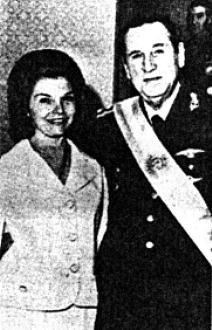
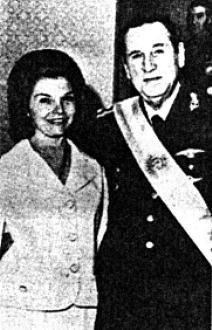
Peron and his wife Isabel Martinez when they assumed the presidency of the Republic of Argentina on October 12, 1973

The granting of the social covenant renegotiation triggered the resignation of Gelbard. This reorganization of the government, López Rega was the height of their power and strengthened the union bureaucracy coincided with an upsurge of violence.


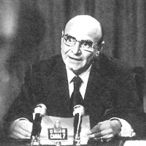
mid-1975, Perón set of agreements that had been articulated and constituted the core of his project of political institutionalization, had failed and the country seemed to walk aimlessly. The arrival of Celestino Rodrigo (pictured above left) to the Ministry of Economy further exacerbated the problems. With the support of Lopez Rega, (photo left) Rodrigo took a number of measures, known as the "Rodrigazo"-devaluation of the peso by 100% and 160%. 181% increase in the price of gasoline and 75% in transport prices, and o-after similar measures, which had the immediate effect of an acceleration of inflation and a political crisis. The political crisis culminated in the Rodrigo displacement and Lopez Rega, caused by a successful general strike called by the CGT.

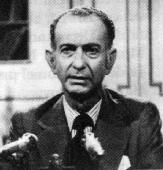
Isabel Peron's government temporarily moved away , which was in the hands of Senate President Italo Luder (pictured right). Economy Minister, Antonio Cafiero, supported by the CGT, tried unsuccessfully to control inflation. Isabel Peron's return to the presidency, the internal crisis of Peronism, the intensification of political violence, and lack of cooperation, in many cases open opposition of big business and the military, the government removed all support base.

A knock announced

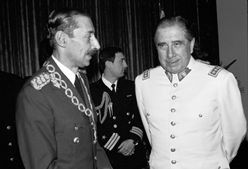
The economic slippage, political violence and the evidence of the breakdown of government opened the breach through which military expenditures returned to the government. On March 24, 1976 the military junta, composed of the commanders of the three weapons, Jorge R. Videla (Army) Emilio E. Massera (Marina) and Orlando R. Agosti (Aeronautics) - overthrew the government of Maria Estela Martinez de Peron and opened what he called "Process of National Reorganization." This new military intervention was different from previous ones.

Masera-Videla-Agosti
Representatives of the Three Armed Forces

The 1966 coup had resulted in a sustained government, ultimately, by the Forces Armed in 1976 the government was exercised directly and at all levels Armed Forces. As the new president, General Jorge R. Videla, 25 May 1976:

"The armed forces were not heeded. As a result and foreseeing the inevitability of the crisis, were prepared to deal with this situation and the Armed Forces as an institution were an institutional response to a crisis also institutional. "

The military government proposed root transform society in Argentina. It was not simply to correct an economic policy to defeat the guerrillas or to resolve a constitutional crisis. It would have been enough for some changes in constitutional law. The military junta that was in question was the existence of a nation. To resolve this crisis, then had to "rearrange" the society in Argentina, in a "process" that he had "time" but "objective."

This "reorganization" was a concrete expression: political and social repression, dismantling the foundations of industrial economics and authoritarian exercise of power. Finally culminated in the military defeat in the Falklands War.

illegal repression, which had its heyday between 1976 and 1978 - was one of the basic features of the military government. The illegality was not so only because it was conducted by a de facto government but because even violated the law established by that government. Repression, carefully planned, organized and directed by the highest levels of political and military, was at the same time, illegal. Recipients were not only members of the guerrilla organizations committed to armed struggle, but extended to a set of social and political actors with no direct links with the guerrilla organizations.

Decree No. 6 of the military junta suspended "the political activity of political parties at national, provincial and municipal levels." The law ordered 21,261 n.0 "temporarily" suspended the "right to strike, as well as that of any other measures of force, unemployment, work interruption or decreased performance or conditions in any way affect the production, by both workers and employers and their respective associations or organizations. "

The clandestine methods of repression included the kidnapping and detention in clandestine centers, we verified the existence of more than three hundred ", torture and, in most cases, execution. The junta introduced the death penalty. But legally it did not apply outside the law. As a result, there was the legal form of the forced disappearance of people, about ten thousand cases tested, although some estimates triple that figure, "including people arrested and secretly executed by security forces. The consequences of repression also included the vast majority of people who lived in a climate of fear of censorship.

Despite its pretense of consistency and firmness, the military government was gone from its origins by deep internal divisions, resulting largely from the particular translation into the action that took the decision to take the government institutionally. The general principle that ensured the participation of the three forces in the government was the distribution of public administration at all levels and modalities-national, provincial, municipal, state enterprises, universities, equally. Each force, or more precisely, the officer corps of each force, was left with a third of public office. This decision, which revealed the nature of relations between forces, characterized by a deep mistrust also marked a difference between the government of "Process" and the previous military interventions, which have a larger weight of civil servants in public administration.

Between 1976 and 1981, the vast majority of senior public administration was in the hands of officers of the Armed Forces. This hampered the functioning of the state, mainly because each officer fell under two heads: his superior in the hierarchy of public administration and senior military. This dual dependence contributed to the fragmentation of the state in multiple units which enjoyed de facto autonomy, with the predictable effects of corruption. Furthermore, the same institutional and legal order of the government of "process" was characterized by inconsistency and arbitrariness. As highlighted the repressive action, the military government did not comply with the laws he himself had dictated.

Legal status, Underground State

"The state was affected even more deeply. The so-called National Reorganization Process led to the coexistence of a terrorist state underground, in charge of law enforcement, and other visible, subject to rules established by the revolutionary authorities themselves but their actions subjected to some legality. In practice, this distinction is not maintained, and illegal state was corroding and corrupting the conj Unto the state institutions and its own legal structure.

dark The first question was where real power lay, as though the country's political tradition was strongly presidential system, since the control unit was always one of the principles of the Armed Forces, the authority of President-at first the first among their peers, and then not even that-was diluted and subjected to constant scrutiny and limitation of the heads of the three weapons. "LUIS ALBERTO ROMERO

Brief Contemporary History of Argentina (1994)

Economics During the Military Government
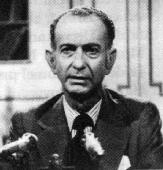
The military government's economic policy was decided and implemented for five years by Jose Alfredo Martinez de Hoz. Minister of Finance between 1976 and 1981. Martínez de Hoz concentrated enormous power, which allowed him to make decisions profoundly transformed the operation of the Argentinian economy and society. The economic program that Martinez de Hoz had the country on April 2, 1976 was inspired liberal and postulated the need to move from an economy of speculation to production, through encouraging competition and limiting the role of state in the economy. These objectives were not achieved. By contrast, the result of the economic policy of Martinez de Hoz was an explosive growth of financial speculation and a dramatic fall in productive activities.

Initially, the military government took a series of stabilization measures, which were supported by the Fon-International Monetary Fund and foreign private banks to control inflation, reduce the fiscal deficit and balance the external sector. It devalued the currency, reduced public-sector deficit largely freezing wages, and external financing was obtained. Economic policy had a strongly anti-labor bias: it suspended the right to strike and reduced employee participation in the GDP (gross domestic product).

After controlling the open with Rodrigazo crisis, the economic team was defined and forward two main dimensions: economic opening and liberalization of financial markets.

The opening of the economy was the opening of the domestic market to foreign competition, not to promote the export of domestic production. The main instrument of this policy was the reduction of import tariffs. Subsequently, the overvaluation of the peso is high on this measure, which seriously compromised the productive activity, also affected by high interest rates.

financial market liberalization was After the release of the interest rate and authorization for the operation of new banks and financial institutions. However, the State, who resigned from the controls, guaranteed fixed-term deposits taken by private financial institutions.

In 1978 the military government established a pattern change, known popularly as the "little board" - which determined a monthly devaluation of the peso. This devaluation was decreasing and tends to zero. The stated aim of this measure was to control inflation. This objective was not achieved. Instead, what was a strong speculation fostered a large amount of money placed in the short term favored by the abundance of dollars on the international market, based on the existence of high interest rates and the state guarantees on the repurchase price of dollars.

Some words and phrases commonly used at the time - 'free money', 'bike', 'give me two "- account for the characteristics of a period of artificial prosperity and financial speculation.

financial euphoria contrasted with the behavior of the productive sector, pressured by debt. The industrial sector, in particular, suffered a radical change, including a fall in production, a decrease of labor employed and the closure of many plants.

The scheme of Martinez de Hoz erupted in 1980, with the help of the collapse of major financial institutions, among them one of the largest private banks, and the state ended up taking over the liabilities of failed banks.
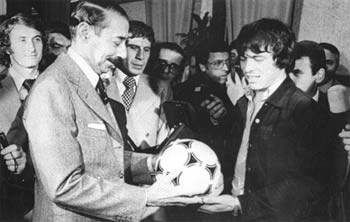
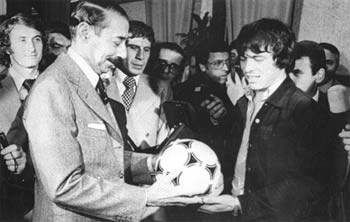
The World Cup of 1978 was held in Argentina and had the strong support of the military dictatorship

In 1981, the overall Viola replaced as president Videla, and Martinez de Hoz was also replaced. In that year, the economic collapse came at the end. The government announced a devaluation of 400%, while inflation was running at 100% annually. This devaluation took unpayable dollar debts of private firms. The state nationalized the debt, which increased the public debt.

Despite its liberal nature, the economic policy of Martinez de Hoz included a considerable expansion of the state's role in the economic sphere. This was partly the decision of the military leadership to maintain the orbit state-owned enterprises whose boards, on the other hand, were occupied by soldiers. Also during this period increased public investment. Many public works were executed by private contractors and some state enterprises privatized part of its activities-what is called "privatization peripheral" -. In the latter case, the outsourcing of tasks included search and exploitation of oil and materials repair work and maintenance of roads in the railways, the provision of telephone equipment, collecting waste and maintenance of public lighting in the city of Buenos Aires. Some of these activities was forming a powerful group of state contractors.

Other areas of growth in government spending were the nationalization of private enterprises in difficulty, as the Company Italo Argentina de Electricidad and the Southern Company, and the remarkable expansion of military spending.

In 1978, the border conflict with Chile in the Beagle Channel area was about to unleash war. The armed forces were retrofitted with a view to confrontation and mobilized troops to the border. The war was prevented by the mediation of Pope John Paul II.

Between the opening and war

The bursting of the economic program agreed with the change of president. The weak domestic bid winner in the senior military leaders was General Roberto Viola, Chairman of the Board appointed commanders in September 1980. Viola, who took office in March 1981, proposed changing the orientation economic policy and find a political solution to the military regime. This was due to attempt to change the perception of a fraction of the Army of policy failure Martinez de Hoz and the need to seek new allies. Viola divided the Ministry of Economy in five portfolios, in order to "depersonalize" economic policy, a majority of civilians joined the cabinet, led to a rapprochement with the owner-named sectors of industry leaders representing rural and industrial ministries Agriculture and Industry, and initiated a dialogue with trade unionists and politicians.

This attempt to find new bases of support for the military regime failed. In the political arena, the opening was coolly received by the main political forces, who doubted the representativeness of Viola within the armed forces and therefore the viability of its policy. In July 1981, was the Multiparty-organized by the Radical Civic Union and comprising parties

Justicialista Intransigente Christian Democratic Movement and Integration and Development ", in order to offer a political bloc unified "force tending to restore democratic institutions and offer the country, temporarily, a proposed solution to the national emergency. "

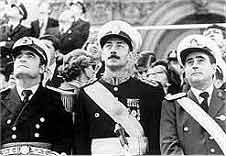
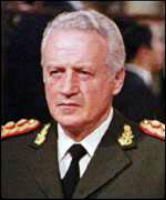
However, the decisive opposition to the project came from the home front Viola military. This opposition was expressed as a power struggle between the junta and the president, which led to the displacement of Viola, in December 1981. His replacement was Gen. Leopoldo F. Galtieri. (Pictured above)
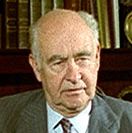
Galtieri sought to restore the image of authority military government and resume the liberal orientation of economic policy, which was in the hands of a new economy minister, Roberto Alemanno (picture left). Tightened relations with political parties and the unions, which in turn also hardened their opposition. A mass rally sponsored by the CGT-Brasil, the militant wing of trade unionism, as distinct from the CGT-Azopardo, more conciliatory, "the March 30, 1982, was severely repressed. But the magnitude and character of the mobilization showed that the social and political opposition had grown up.

Three days later, the military regime in 1978 had led the country to the brink of war with Chile, shunned by the mediation of the Pope began his final stage, with the military occupation of the Falkland Islands.

The Falklands War

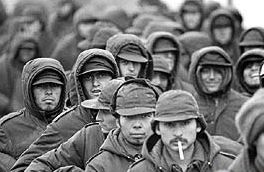
On 2 April 1982 the government forcibly occupied the Falkland Islands. Occupation, although it originated in a decision taken in secret by a few people and not properly calibrate its military and political consequences, had broad popular support.
b

The government figured that the recovery of the Malvinas would solve their political problems in a time when the direction of military experience is compromised. At first, this seemed possible. But the government had underestimated the response of Britain and also believed that the United States, whose main ally was just Great Britain, Argentina would support action.
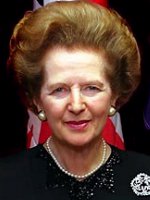
The British reaction, largely driven by domestic political reasons- was hard. Margaret Thatcher's government decided to send a powerful fleet and military forces to retake the islands. The United States, after the failure of the mediation of General Haig, who attempted that the Argentine government accepted resolution 502 United Nations troops withdraw from the islands, strongly supported its main ally.

The military government decided to strictly control the dissemination of news about the political and military conflict, and created a climate triumphalist not correspond to the actual course of events.

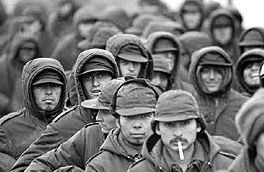
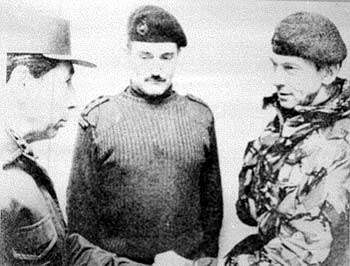
piano in the policy International Argentina received the accession of the countries of Latin America and the Non-Aligned Movement, but was isolated from the Western powers. A desperate attempt by the Argentine government to change its alliances and enlist the support of the USSR was also unsuccessful. Militarily, the British power and the organization exceeded the chaotic and improvised device Argentine military. On June 14, 1982, the Argentine military commander in the Falklands surrendered to the British commanders.

... On June 15, 1982, Argentine troops surrendered to the English. The Falklands war was over. Also beginning the end of military dictatorship. (Photo: Archivo General de la Nación)

From Carter to Reagan


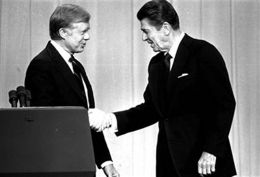
Relations between Argentina and the United States during the "Process" crossed two distinct Atapas. In the first, the United States government was in the hands of James Carter, the Democratic Party, which made the defense of human rights a priority in Latin America. This approach led to a permanent conflict with the Argentine government that systematically violated human rights. The change of administration, when Republican Ronald Reagan replaced Carter resulted in a change of policy towards Argentina. Reagan, who was seeking allies for its foreign policy, he found an enthusiastic adherent Galtieri, willing to align Argentina with U.S. foreign policy and military intervention in Central America. The U.S., meanwhile, lifted the sanctions that the Carter administration had imposed on Argentina. Galtieri, enthusiastic praise Americans and ignorant of the relative importance of allies United States, meant that this support will translate into a benevolent neutrality in the conflict to start thinking with Britain.
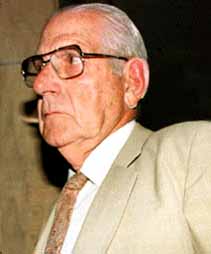
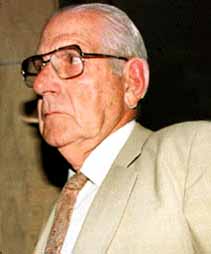
Given the military conditions of conflict and control of information by government, military defeat was both inevitable and unexpected. One of its main consequences was the immediate breakdown of the military government. Galtieri resigned, Navy and Air Force withdrew from the Board and the commander of the Army appointed a new president, Gen. Reynaldo Bignone. (pictured right)

Source: Historia Argentina Luchilo-Roman-Paz